
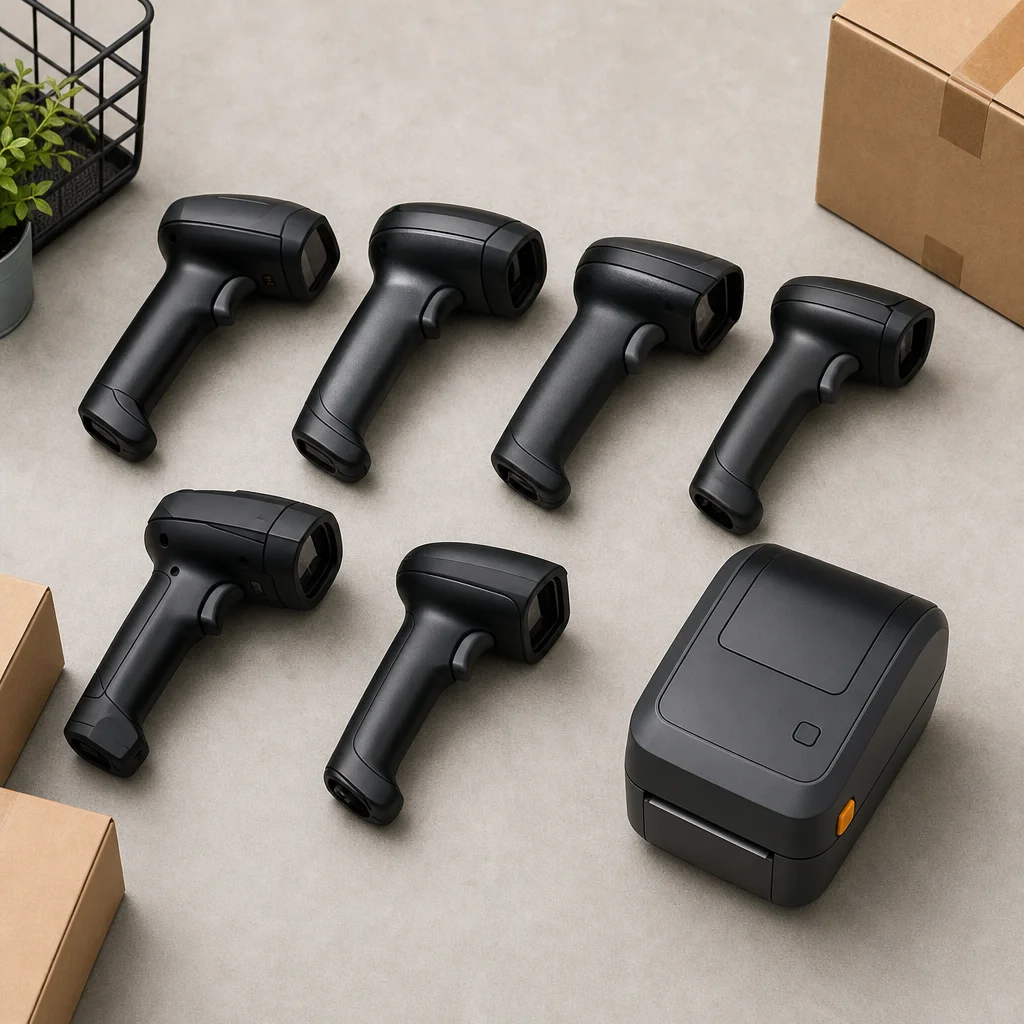
How to Choose the Right Zebra Barcode Scanner for Your Business
Start with your environment
Choosing the right Zebra barcode scanner starts with where and how it will be used. A quiet retail counter has very different demands than a dusty warehouse floor or a busy hospital corridor. Matching the scanner to its environment is the single biggest factor in getting years of reliable service out of it.
Corded vs. wireless
Corded scanners are simple, affordable, and never need charging — a great fit for fixed checkout lanes or single-station setups. Wireless (Bluetooth) scanners free staff to move around a stockroom, service counter, or large retail floor, at a small premium in cost and battery management.
1D vs. 2D imaging
If you only need to read traditional linear barcodes, a 1D laser scanner is a cost-effective choice. If you scan QR codes, PDF417 labels, driver's licenses, or damaged and low-quality barcodes, a 2D imager reads a much wider range of formats and handles screens and mobile coupons as well as print.
Durability ratings
Look at the IP rating and drop specification. A standard-duty scanner suits light retail use; an ultra-rugged model with a high drop rating and sealed housing is built for warehouses, manufacturing floors, and outdoor work where drops, dust, and moisture are a daily reality.
Quick checklist
- Fixed counter or mobile use → corded or wireless
- Simple barcodes only or QR/mobile codes too → 1D or 2D
- Clean environment or industrial/outdoor → standard or ultra-rugged
- Single register or fleet across a facility → consider charging cradles and multi-unit support
Browse our full range of Zebra scanners to find the model that matches your workflow, or reach out and we can help you compare specs side by side.
Written by U-ECOM